
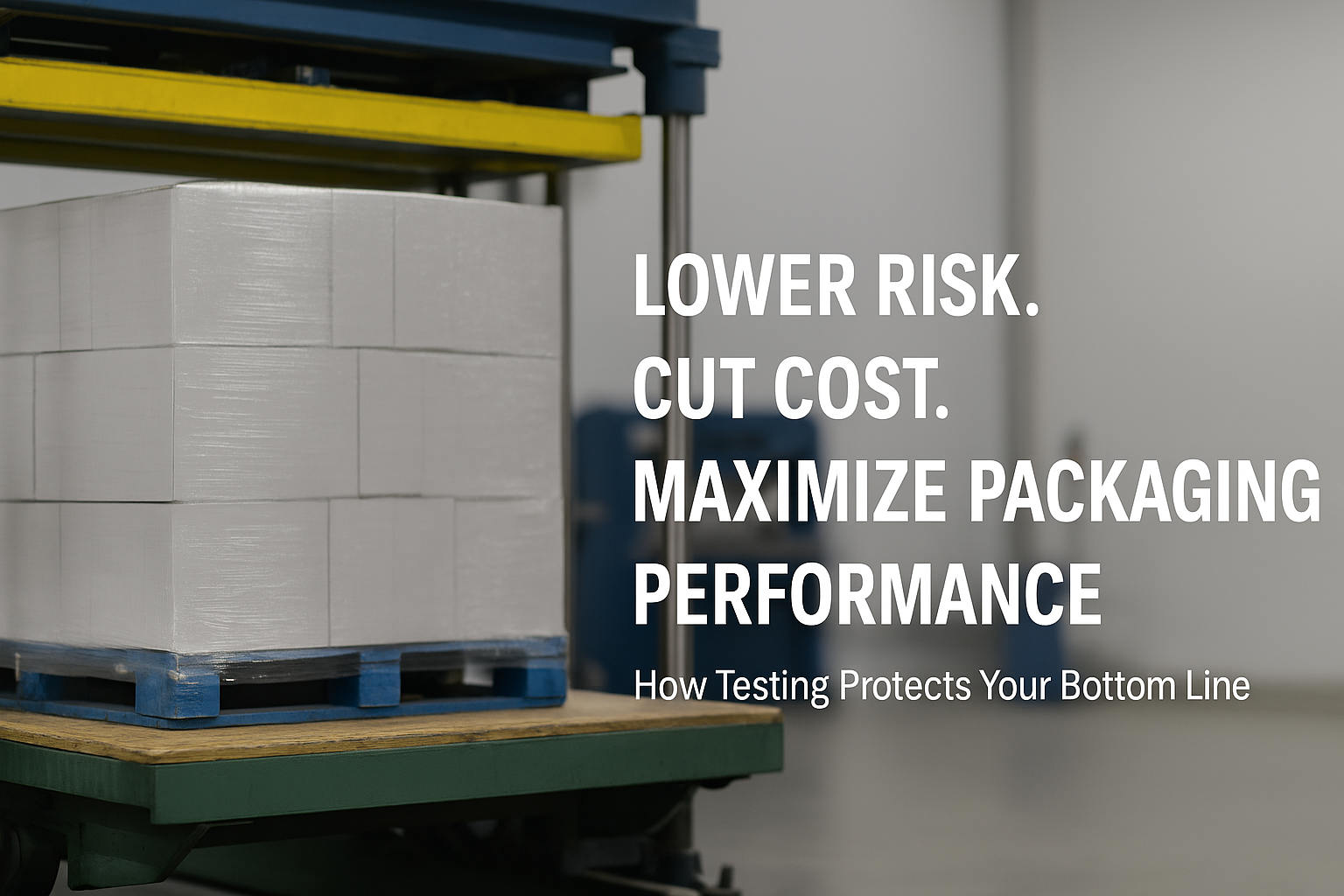
| How does packaging testing actually reduce cost instead of just adding an expense? Packaging testing identifies exactly how much material a design actually needs — not how much you’re using out of caution. Vibration, drop, and compression testing show where corrugate, cushioning, or board grade can be safely reduced without sacrificing protection. That translates directly into lighter packaging, lower freight cost, and fewer damage claims — the three levers that actually move margin. |
If you design or validate packaging, you already know the tension: reduce material, maintain protection, and keep margins healthy. gh Testing helps packaging engineers, quality managers, and operations leaders do exactly that through certified ISTA and ASTM testing — testing that doesn’t just validate performance, it removes waste, reduces risk, and strengthens the bottom line.
Driving Out Cost Through Smarter Packaging Validation
Every extra layer of corrugate, wrap, or foam adds cost and complexity. Testing early in the design phase shows exactly how packaging performs, so excess material gets removed before production begins — not discovered as waste after the fact.
- Vibration testing replicates the motion of truck, rail, or air transport, showing how packaging actually behaves in transit.
- Drop testing reveals how well corners, seals, and cushioning protect products during handling.
- Compression testing measures how much load packaging can withstand in pallet stacks, showing where board grade can be safely reduced.
Because these methods produce measurable data, you can confidently reduce material use, lower freight costs, and cut waste without guessing at the margin.
Reducing Risk Through Real-World Simulation
Product damage in transit isn’t random — it’s predictable, and preventable. Environmental and temperature chamber testing recreates heat, cold, and humidity extremes, confirming materials, adhesives, and labels perform reliably across every climate a shipment actually passes through.
Shock and incline impact testing simulate sudden stops or rough handling during transport, and atmospheric conditioning keeps temperature and humidity consistent throughout testing, so results reflect real conditions rather than a controlled best case.
These simulations uncover weaknesses before your product reaches a customer — preventing costly returns, product loss, and damage to your brand’s reputation.
If your current test program only covers drop and vibration, environmental exposure is the gap most programs don’t find until a shipment already failed. Contact gh Testing to talk through which test sequence applies to your product.
Improving Margins Through Data and Confidence
Reducing cost and limiting risk isn’t a tradeoff — margin growth follows directly from both. With ISTA and ASTM-compliant methods, you gain a measurable advantage: lighter packaging, fewer damage claims, and faster product launches.
Testing from our Fairfield, Ohio lab supports pharmaceutical, Consumer Packaged Goods (CPG), and automotive clients making confident, data-driven decisions — the result is a stronger, more efficient, and more profitable supply chain.
Frequently Asked Questions
How much can packaging testing actually reduce material cost?
It varies by product and current design, but the pattern is consistent: programs that test at the design phase, rather than after production is committed, typically find real opportunities to reduce board grade, cushioning volume, or wrap layers without sacrificing protection. The exact number depends on what your current packaging is over-engineered for.
Does reducing packaging material increase the risk of damage?
Not when the reduction is based on test data rather than guesswork. The goal isn’t less packaging — it’s packaging sized to what your product and distribution channel actually require, confirmed through vibration, drop, and compression testing rather than assumed from habit or excess caution.
When in the product lifecycle should I test to capture the most cost savings?
As early as possible — ideally during design, before tooling and production are committed. A test at that stage identifies over-engineering while it’s still cheap to fix. Testing after launch still has value, but the savings shift from “avoided cost” to “identified going forward,” since existing inventory and packaging commitments are already in place.
Ready to Prove It
Every shipment is a test — whether you measure it or not. gh Testing helps packaging engineers validate designs, improve performance, and protect profitability through proven ISTA and ASTM testing.
If you’re ready to drive out cost, reduce risk, and grow your margins, tell us about your current packaging and we’ll tell you where the opportunity is. Contact gh Testing or call 513-870-0080.